1. Advanced Biochar Production Plant Manufacturer for Libya
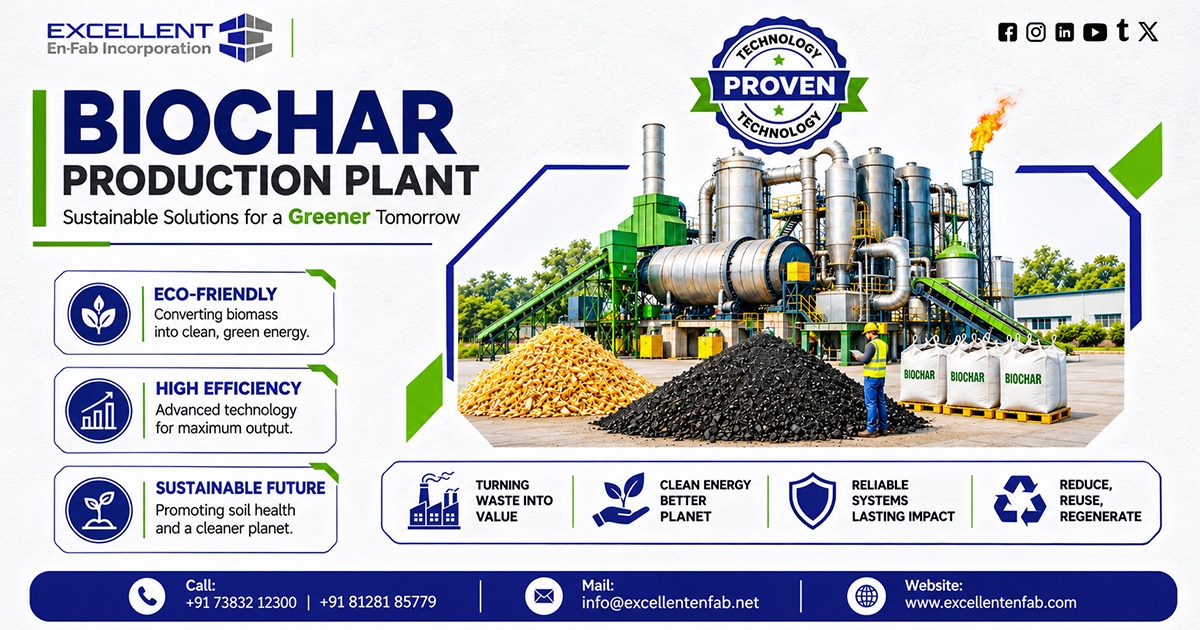
En-Fab Incorporation provides industrial processing solutions designed to support biomass conversion, resource recovery, and sustainable production requirements. Our biochar production plant technology helps businesses transform suitable agricultural residues, organic waste, and other biomass materials into useful biochar products.
Whether you are establishing a new biochar manufacturing facility or expanding an existing biomass processing operation, En-Fab Incorporation offers solutions to meet different industrial requirements in Libya.
2. Why Invest in a Biochar Production Plant in Libya?
Libya has opportunities to explore biomass utilisation, agricultural residue management, and sustainable industrial development.
Investing in biochar production technology can help businesses create value from locally available biomass resources.
Major advantages include:
- Biomass Waste Utilisation: Convert suitable organic residues into commercially valuable biochar.
- Agricultural Benefits: Biochar can improve soil properties and water retention when appropriately produced and applied.
- Carbon Management: Biochar can support long-term carbon storage under suitable production, application, and monitoring conditions.
- Resource Recovery: Utilise biomass materials that may otherwise remain underutilised.
- Industrial Opportunities: Develop biochar manufacturing facilities for agricultural and environmental markets.
3. Biomass Materials Suitable for Biochar Production
Selecting the right raw material is essential for achieving consistent biochar quality and efficient plant operation.
Depending on feedstock properties and plant configuration, suitable materials may include:
- Agricultural crop residues.
- Wood chips and wood waste.
- Sawdust and forestry residues.
- Coconut shells.
- Groundnut shells.
- Rice husk.
- Cotton stalks.
- Date palm residues.
- Other suitable organic biomass materials.
4. Biochar Manufacturing Process
A well-designed biochar production system follows a controlled sequence of operations to convert biomass into carbon-rich solid products.
Step-by-step production process:
- Raw Material Collection: Collect suitable agricultural, forestry, and organic biomass residues.
- Biomass Preparation: Remove unwanted impurities and prepare the feedstock.
- Size Reduction: Process biomass into suitable particle sizes according to system requirements.
- Moisture Control: Reduce excessive moisture to support efficient thermal processing.
- Feeding System: Transfer prepared biomass into the pyrolysis unit.
- Controlled Pyrolysis: Heat biomass under oxygen-limited conditions to produce biochar and gaseous by-products.
- Cooling Process: Cool the produced biochar under controlled conditions.
- Collection and Storage: Collect and store the finished biochar safely.
- Quality Assessment: Evaluate the final product according to its intended application.
5. Applications of Biochar Produced in Libya
Biochar has various potential applications across agriculture, environmental management, and industrial sectors, depending on its quality and characteristics.
- Agriculture: Soil conditioning and improvement of selected soil properties.
- Horticulture: Supporting growing media and soil management applications.
- Land Restoration: Potential use in soil rehabilitation projects.
- Composting: Incorporation into suitable composting processes.
- Environmental Management: Supporting carbon storage initiatives.
- Industrial Applications: Use as a carbon-rich material in selected industrial processes.
6. Frequently Asked Questions About Biochar Production Plant in Libya
Q1: Which raw materials are suitable for biochar production?
A1: Wood waste, rice husk, coconut shells, agricultural residues, sawdust, and suitable organic biomass materials can be processed.
Q2: What is the main purpose of biochar?
A2: Biochar is commonly used for soil improvement, agricultural applications, selected industrial uses, and carbon storage initiatives.
Q3: Can a Biochar Production Plant process agricultural waste?
A3: Yes, suitably prepared agricultural residues can be processed depending on their moisture, composition, particle size, and plant configuration.
Q4: Is biochar production suitable for businesses in Libya?
A4: Yes, businesses can explore biochar manufacturing using locally available biomass resources after evaluating feedstock supply and market requirements.
Transform biomass waste into valuable biochar with En-Fab Incorporation’s advanced production solutions for sustainable industrial growth in Libya.
Contact: +91 73832 12300 | +91 81281 85779
Email Id: Info@excellentenfab.net
Website: www.excellentnfab.com
View Product: Click here